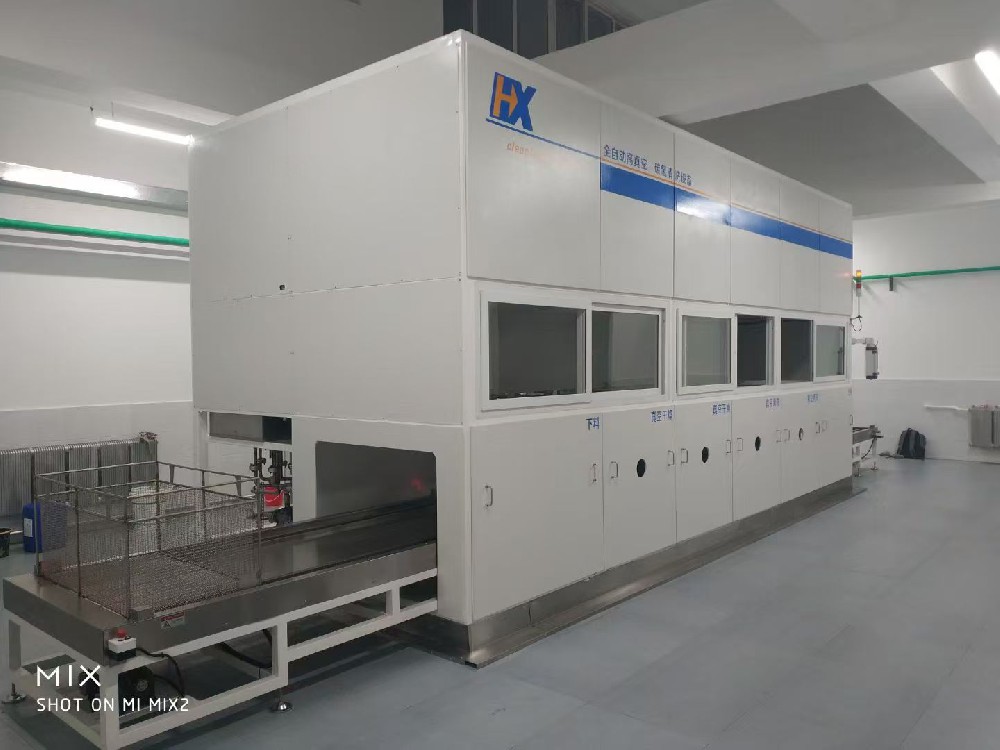
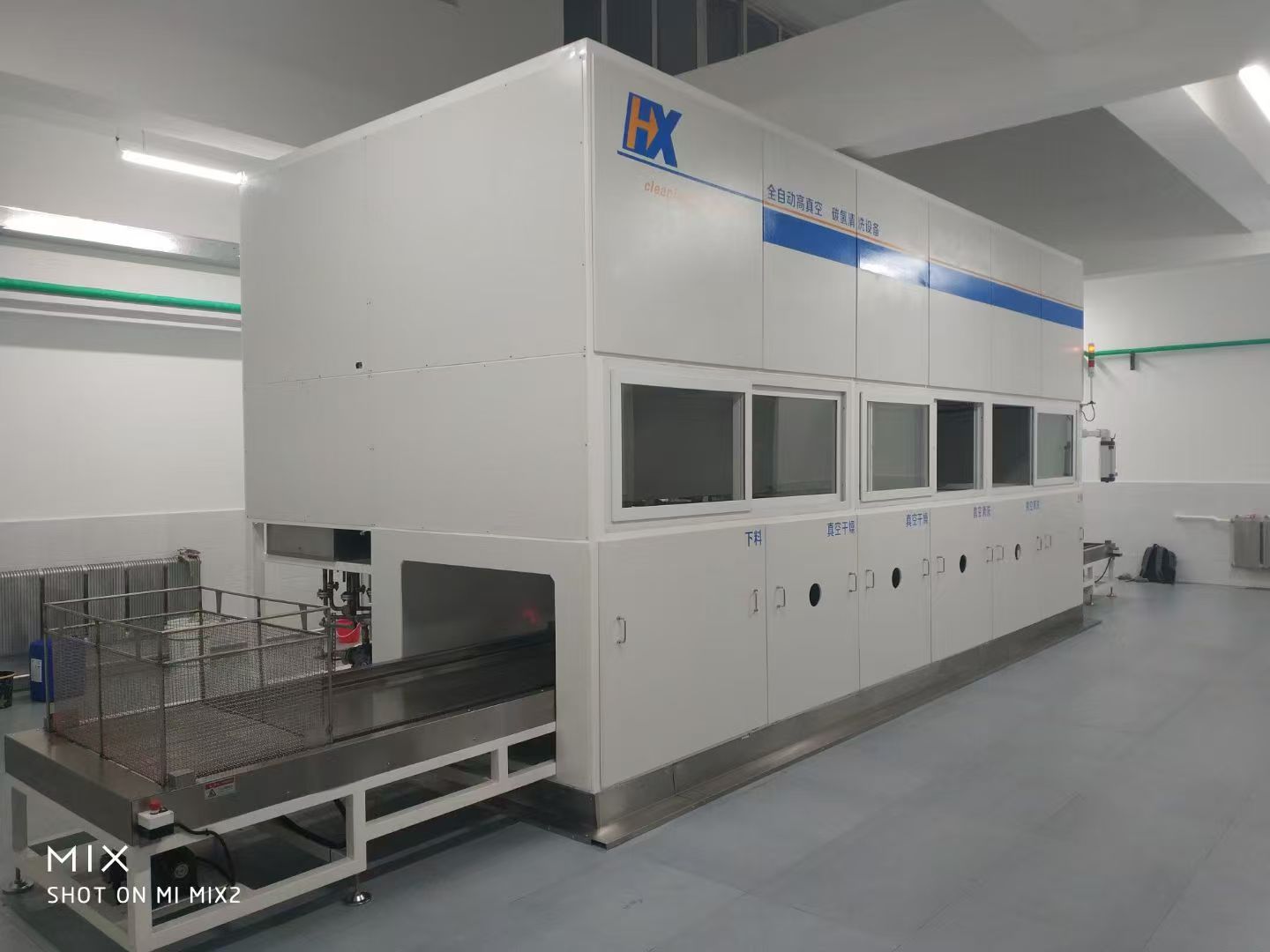
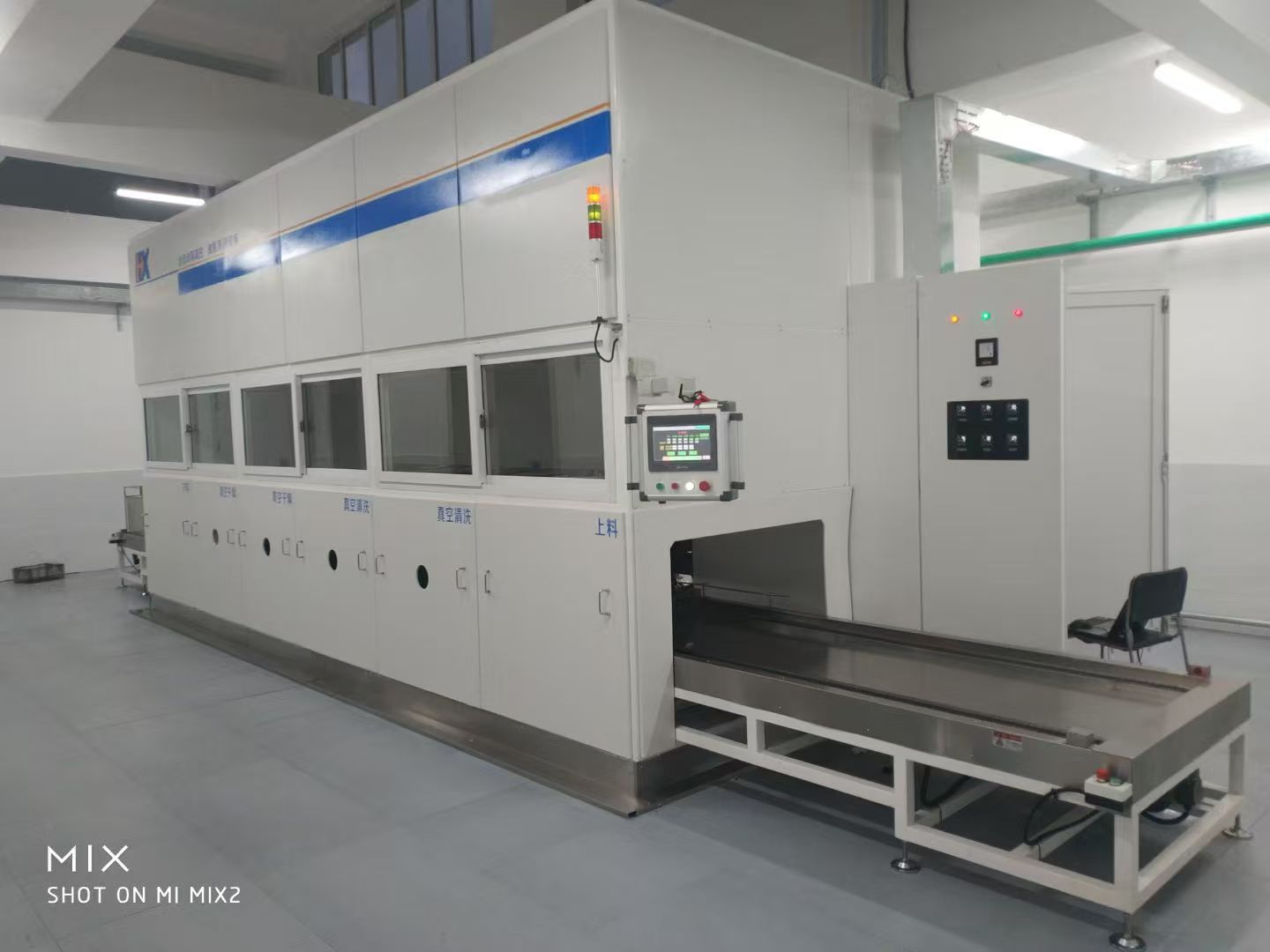
Industrial Ultrasonic Hydrocarbon Cleaning Equipment Overview
Industrial ultrasonic hydrocarbon cleaning equipment combines hydrocarbon solvents (C8-C16 alkanes) as the cleaning medium with ultrasonic cavitation for physical contaminant removal. It integrates distillation recovery, vacuum drying, and explosion-proof systems into a closed-loop cleaning solution. Primarily, it addresses three critical needs for precision parts: effective degreasing, material compatibility, and environmental compliance. It represents a high-end alternative to trichloroethylene and aqueous-based cleaning systems.
I. Working Principle: Synergy of Physics and Chemistry
Hydrocarbon Solvents: Composed mainly of C8-C16 straight-chain or branched alkanes with a dielectric constant of 2.0–2.5. Leveraging the principle of "like dissolves like," they achieve a dissolution rate exceeding 95% for oily contaminants such as mineral oils, cutting fluids, flux residues, and polishing waxes. These solvents are chlorine-free, halogen-free, ODS-free, and compatible with both metals and non-metals.
Ultrasonic Cavitation: Transducers convert electrical energy into high-frequency mechanical vibrations (typically 28–80 kHz; up to 120–200 kHz for precision parts). This generates and collapses micro-bubbles within the solvent, creating localized extreme temperatures and pressures that blast contaminants from crevices.
Synergistic Effect: The solvent chemically swells and softens oils, while cavitation physically dislodges them—significantly faster than aqueous or solvent-only methods. For instance, cleaning an engine component that traditionally requires 2 hours of manual scrubbing can be completed in approximately 15 minutes with this system.
II. System Composition (Key Distinctions from Aqueous Systems)
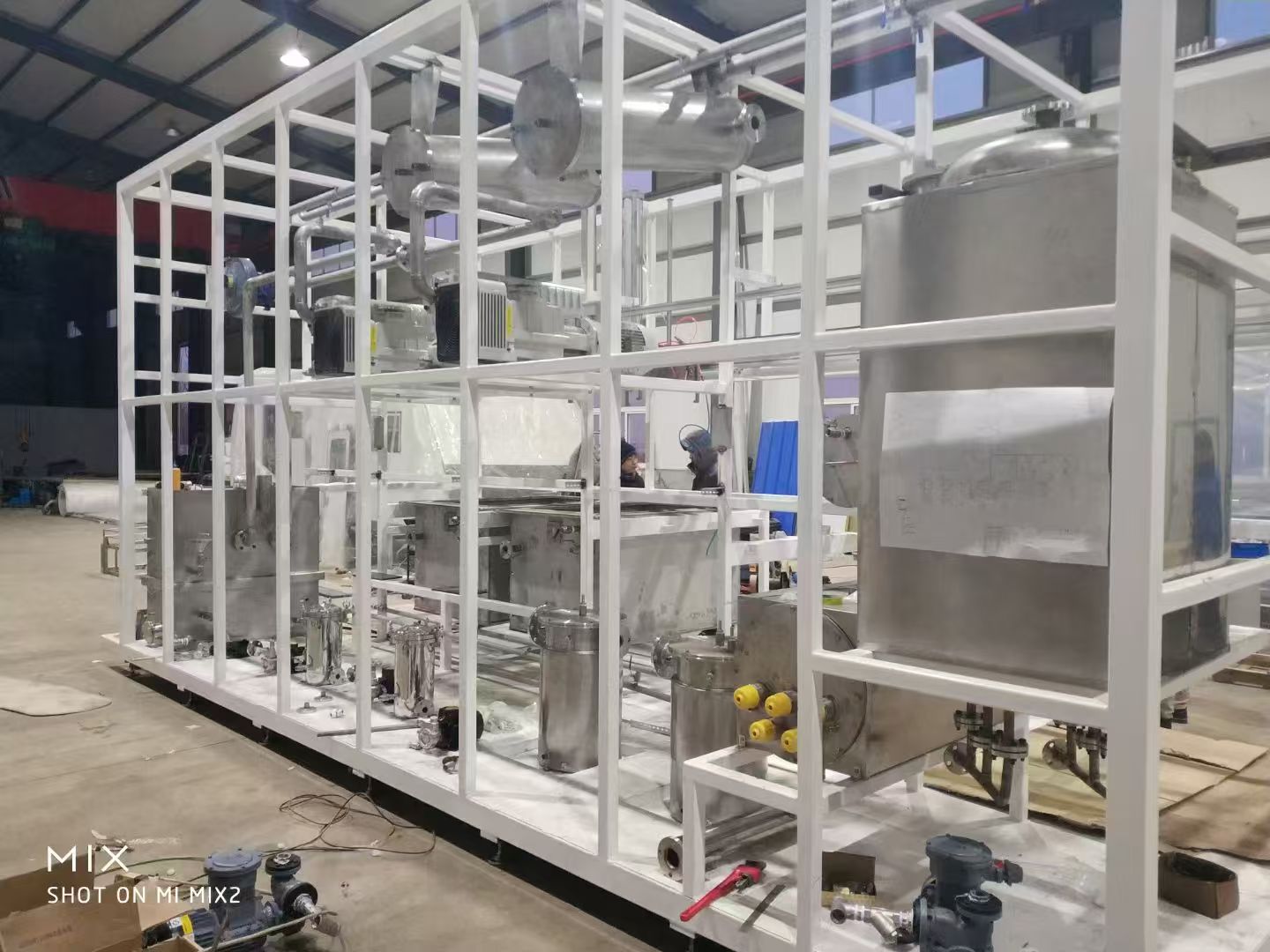
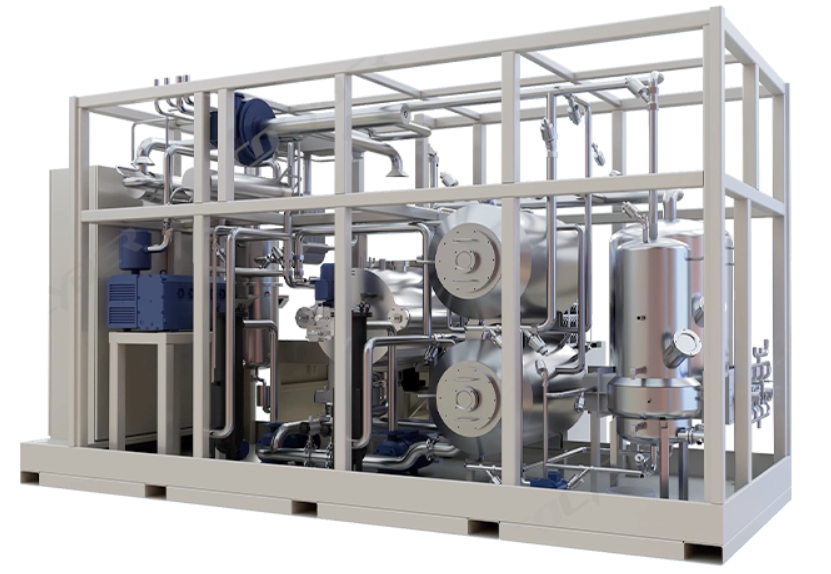
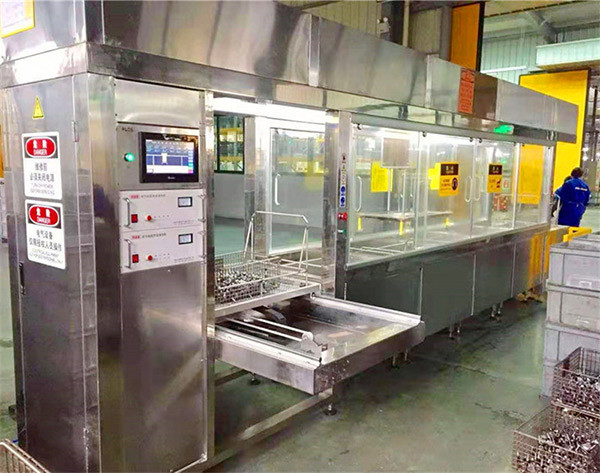
Due to the low flash point (closed cup ≥60°C), volatility, and flammability of hydrocarbon solvents, the system is far more complex than a simple "tank + transducers" setup. It incorporates critical safety and recovery subsystems:
Subsystem | Function |
|---|---|
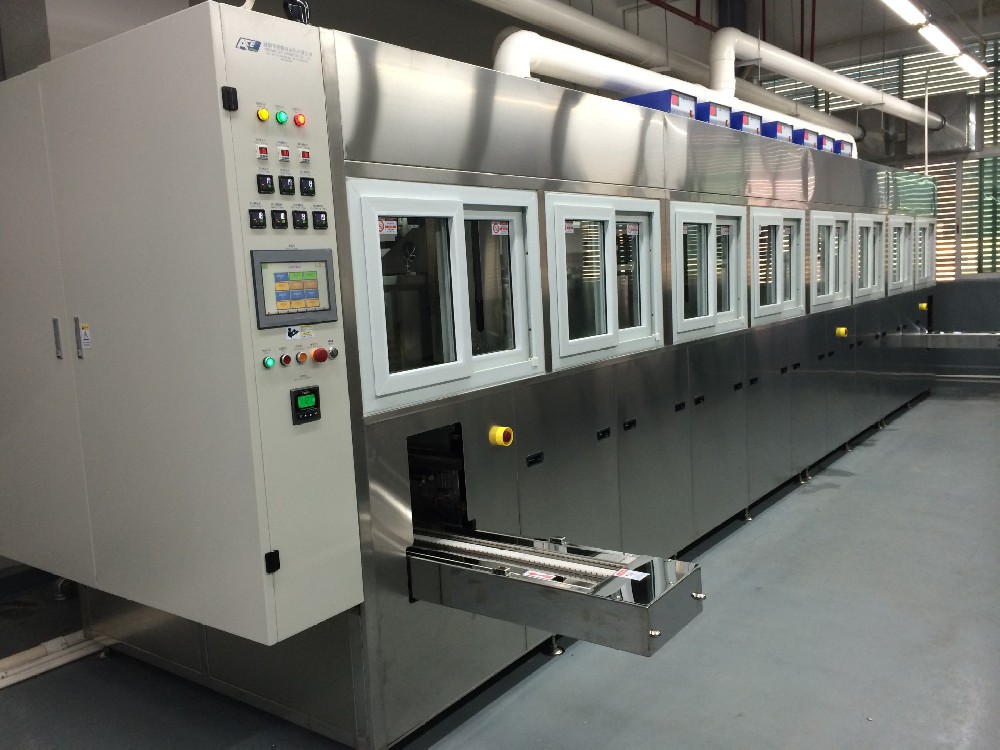
Vacuum Degassing Ultrasonic Tank | Removes dissolved gases from the solvent to ensure uniform cavitation and eliminate cleaning dead zones. |
Ultrasonic Rinsing Tank | Performs secondary rinsing with fresh solvent, preparing parts for water-displacement and drying. |
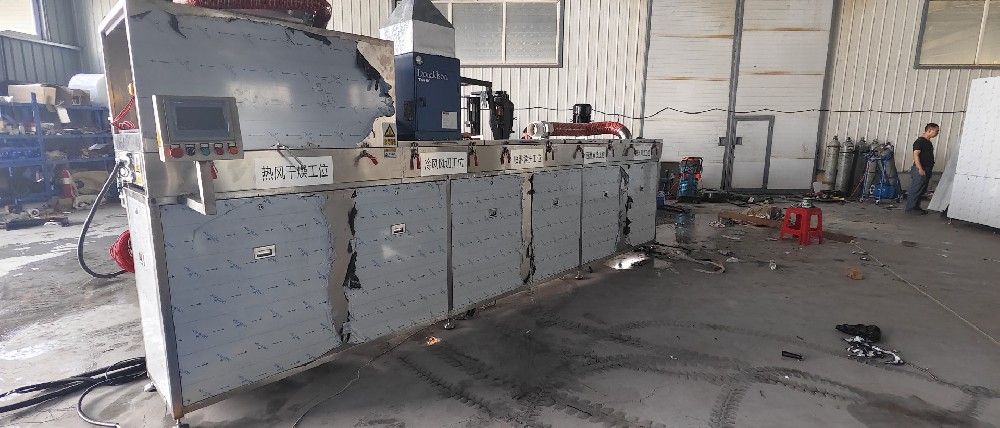
Vapor Phase Bath & Vacuum Drying Tank | Uses solvent vapor for final dissolution of residues; vacuum forces evaporation of high-boiling-point hydrocarbons for complete dryness. |
Distillation Recovery System | Heats contaminated solvent, condenses purified vapor for reuse. Recovery rates ≥95%, which is key to the economic viability of hydrocarbon cleaning. |
CO₂ Fire Suppression + Enclosure + Explosion-Proof Electricals | Mitigates fire risk inherent to hydrocarbons through full enclosure, sealed design, and ATEX/IECEx-compliant components. |
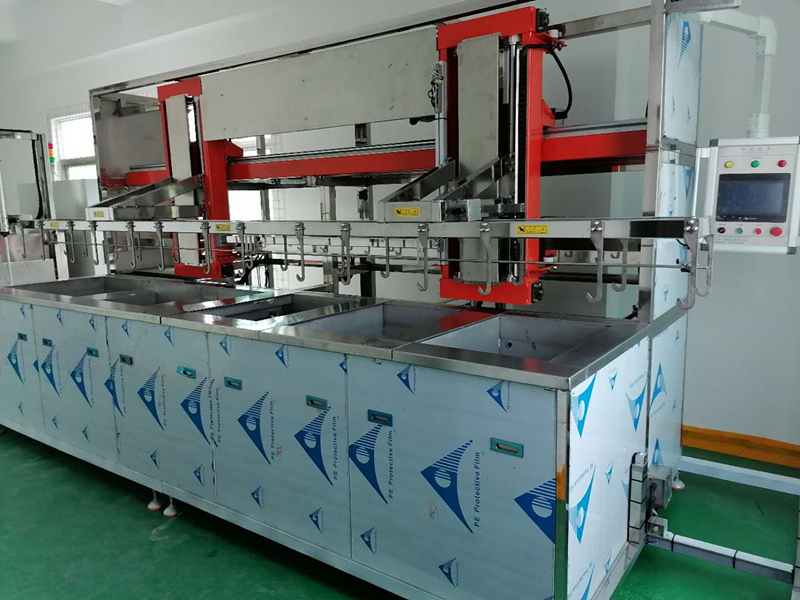
PLC Control & Robotic Handling | Automates multi-tank processes, auto-refilling, and data logging for traceability. |
Typical Process Flow: Loading → Vacuum Degassing Ultrasonic Wash → Fresh Solvent Ultrasonic Rinse → Vapor Phase Bath → Vacuum Drying → Unloading
💡 Key Performance Metrics: Operating vacuum: -0.08 ~ -0.095 MPa; Temperature control: ±1°C; Post-dry residue: ≤0.005 mg/cm²
III. Advantages Over Aqueous or Trichloroethylene Systems
Superior Oil Removal: Significantly higher solvency for oils, cutting fluids, and waxes compared to aqueous cleaners. Capable of penetrating complex blind holes and narrow gaps.
Material Safety: Chlorine-free and halogen-free formulation prevents corrosion on aluminum alloys, copper, stainless steel, glass, and ceramics. Poses much lower occupational health risks than trichloroethylene (acute inhalation toxicity approx. 1/100th).
Solvent Recyclability: High distillation recovery (≥95%) reduces long-term consumable costs compared to single-use aqueous cleaners plus wastewater treatment. Industry data suggests annual cleaning cost reductions of 30–50%.
Environmental Compliance: Biodegradation rate ~75%. VOCs are contained within the sealed system, complying with RoHS, REACH, and ISO 14001 standards.
Considerations: Higher initial capital investment (see pricing below), requirement for explosion-proof facilities due to solvent flashpoint, and greater operational/maintenance expertise compared to aqueous lines.
IV. Typical Applications
Automotive Components: Blind hole degreasing of transmission gears, engine blocks, fuel injectors—meeting ISO 4406 cleanliness codes.
Aerospace: Engine blades, turbine discs requiring zero tolerance for microscopic particles.
Electronics / PCB / Semiconductor: Post-solder flux removal, organic contamination cleaning on wafers (requires ESD-safe and vacuum drying configurations).
Precision Hardware / Bearings / Optics: Polishing wax removal, final cleaning prior to assembly.

 QQ客服1
QQ客服1